Your Profitable Job Can Still Run Out of Cash
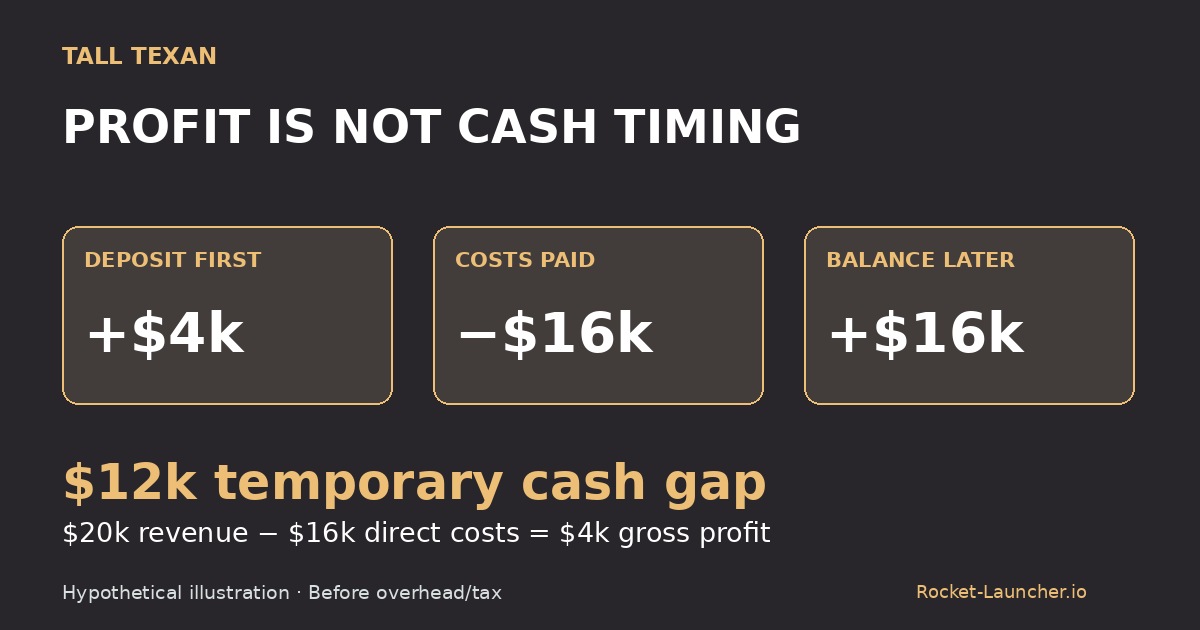
A job can look good on the estimate and still put your checking account under pressure. Profit measures the spread between revenue and costs. Cash timing asks whether you can pay this week’s bills before the customer’s balance arrives.
Put the calendar beside the estimate
An SBA guest article by Marco Carbajo describes the cash gap between paying suppliers and collecting customer payments. Its practical suggestions include prompt invoicing, customer deposits and negotiating payment terms. That September 2016 article is background education, not a new financing program or policy announcement.
Here is an invented job example, assuming the customer pays the entire agreed price and all figures occur as stated:
| Job budget or cash event | Amount |
|---|---|
| Contract revenue | $20,000 |
| Direct job costs | $16,000 |
| Gross profit before overhead and taxes | $4,000 |
| Customer deposit received first | $4,000 |
| Costs paid before the final collection | $16,000 |
| Temporary cash gap | $12,000 |
| Customer balance collected later | $16,000 |
The deposit covers only part of the cost. Paying $16,000 before collecting the balance requires $12,000 beyond that deposit, even though the completed job shows $4,000 of gross profit. A late payment or cost overrun can make the gap larger or longer. Gross profit is not net profit.
The operator’s check
Map expected cash in and cash out by week. Confirm when invoices can be issued, when customers are expected to pay and when suppliers require payment. Where appropriate, agree to documented milestones before work starts. Keep a contingency for delays rather than spending an uncollected margin.
Investor’s view: I want the job’s margin and its largest cash shortfall on the same sheet. A good price does not fund payroll by itself. This illustration offers no credit recommendation, deposit-law advice or promise that a customer will pay.
Source and data date: SBA guest article, How Net 30 Accounts Help Conserve Business Cash Flow, September 13, 2016. Reviewed October 18, 2026. Job figures are hypothetical.